1
Introduction
Generative artificial intelligence (AI) enters artistic production while the maker is still deciding what the work is for. An artist can ask a model to produce material, interpret the result, and propose further work. The resulting interpretation can become an instruction for the next act of making. Through this exchange, a purpose takes shape alongside the objects, language, and procedures through which the artist pursues it. A consequential question arises when the result changes the purpose: what gives the artist grounds to carry that change into subsequent decisions?
Toister and Zylinska[1] describe the reciprocal movement between concepts and images as image thinking. A generated image gives an idea a form through which further associations become perceptible. The artist can examine those associations, change the prompt, and return to the resulting material with a different question. When the same workflow supplies both a work and an explanation of its significance, the artist also has to discover which relationships the explanation helps others encounter. An interpretation gains force when it helps the artist make choices and enables viewers to notice differences in the work.
Consider an artist who requests a sharply rendered portrait and receives an indistinct face. The model describes the blur as an exploration of unstable memory. The artist can investigate that proposal by comparing degrees of recognition, varying the order of images, and observing when a face becomes recognizable. The comparisons let the artist ask which images and arrangements can sustain that interpretation. An image that resolves recognition too quickly may become unsuitable for the sequence, even when it satisfies the original request. The encounter has changed both the criterion and the choices that follow from it.
Plasticity and commitment explain how these encounters change a practice. A judgment brings requirements that later work may reveal or call into question. Plasticity enables a maker to respond by revising a purpose or criterion. Accepting a proof may require abandoning a favored conjecture; encountering an unexpected relationship may reorganize an artwork. In each case, revision becomes consequential when participants learn to notice new differences and make decisions in response.
2
Plasticity and the Force of Commitment
Malabou[2] gives plasticity three related senses: receiving form, giving form, and destroying an established form. Her account describes a transformation that changes the capacities of the person or structure undergoing it. She associates flexibility with adaptation to demands imposed from elsewhere; plasticity also includes the power to reshape or break with an established arrangement. Applied to artistic judgment, this account directs attention to changes in what a maker can perceive, distinguish, and pursue through further work.
Returning to the blurred portrait, the artist can develop this capacity by comparing how recognizable each face is, where its likeness breaks down, and how the sequence unfolds. These comparisons give specific content to the interpretation of unstable memory. A sharply rendered portrait might resolve the uncertainty too quickly, while a less legible image might prolong it productively. The artist acquires grounds for accepting and refusing particular images. If each new image instead receives an accommodating description while the selection habit remains unchanged, the commentary documents a continuing preference for persuasive results. The difference becomes visible in the artist’s later choices: does the new interpretation actually affect what is selected?
Brandom[3] explains commitment through the consequences and incompatibilities of a judgment. Someone who identifies a substance as copper undertakes further claims about how it behaves. Other people can challenge that identification by examining the relevant properties. The judgment thus establishes relationships among what the speaker accepts, what others can ask the speaker to justify, and what could require a revision. Commitment gives a judgment this continuing force across later encounters.
An artist similarly gives a judgment practical force through decisions about form. When a sequence depends on a gradual loss of recognition, its ordering becomes consequential. Replacing an image may weaken that movement, intensify it, or introduce a different relationship. Describing the sequence as an investigation of memory directs the maker toward the ways viewers encounter recognition and loss. The maker can compare arrangements, assess their effects, and revise the interpretation in response to what those comparisons disclose.
In artistic making, participants often discover such requirements through perception and action. An artist may hear that a pause changes the force of a reply before finding words for its effect. A small print can draw a viewer closer; a sequence can establish an expectation and interrupt it. Subsequent adjustments reveal which relationships have become important to the work. Applied to artistic form, commitment concerns the practical requirements that emerge through making. Viewers may not know the process behind the work, but they can look, listen, and compare its effects, and question the choices that produced them.
Commitment gives exploration a direction that an encounter can transform. An artist who values immediacy can discover the force of delay when a new arrangement unsettles that expectation. Exploring the delay reveals another way to organize attention. The artist then carries this discovery into later decisions about pace, sequence, and duration. Earlier judgments remain part of the work's history because they help explain what changed and why the new direction matters.
A continuing commitment can also require the abandonment of a particular choice. A researcher committed to valid inference may have to relinquish a conjecture. An artist pursuing uncertain recognition may have to discard the most technically accomplished portrait in a sequence. In each case, another consideration gives the participant a reason to revise the initial decision. The revised judgment creates further requirements of its own. Plasticity operates through this selective change: participants alter a belief, criterion, or purpose and work through the effects on related decisions.
Alicia Guo's Cephalopoet (2026) places this relationship inside an editing procedure. Deleting a branch of text generates two new branches. Guo describes the interactive poem as an experiment in the scale of AI generation and the constraints on editing it [4][5]. The reader selects material for removal, and the procedure converts that selection into further production. Guo makes the consequences of a familiar action available for examination by changing what that action accomplishes.
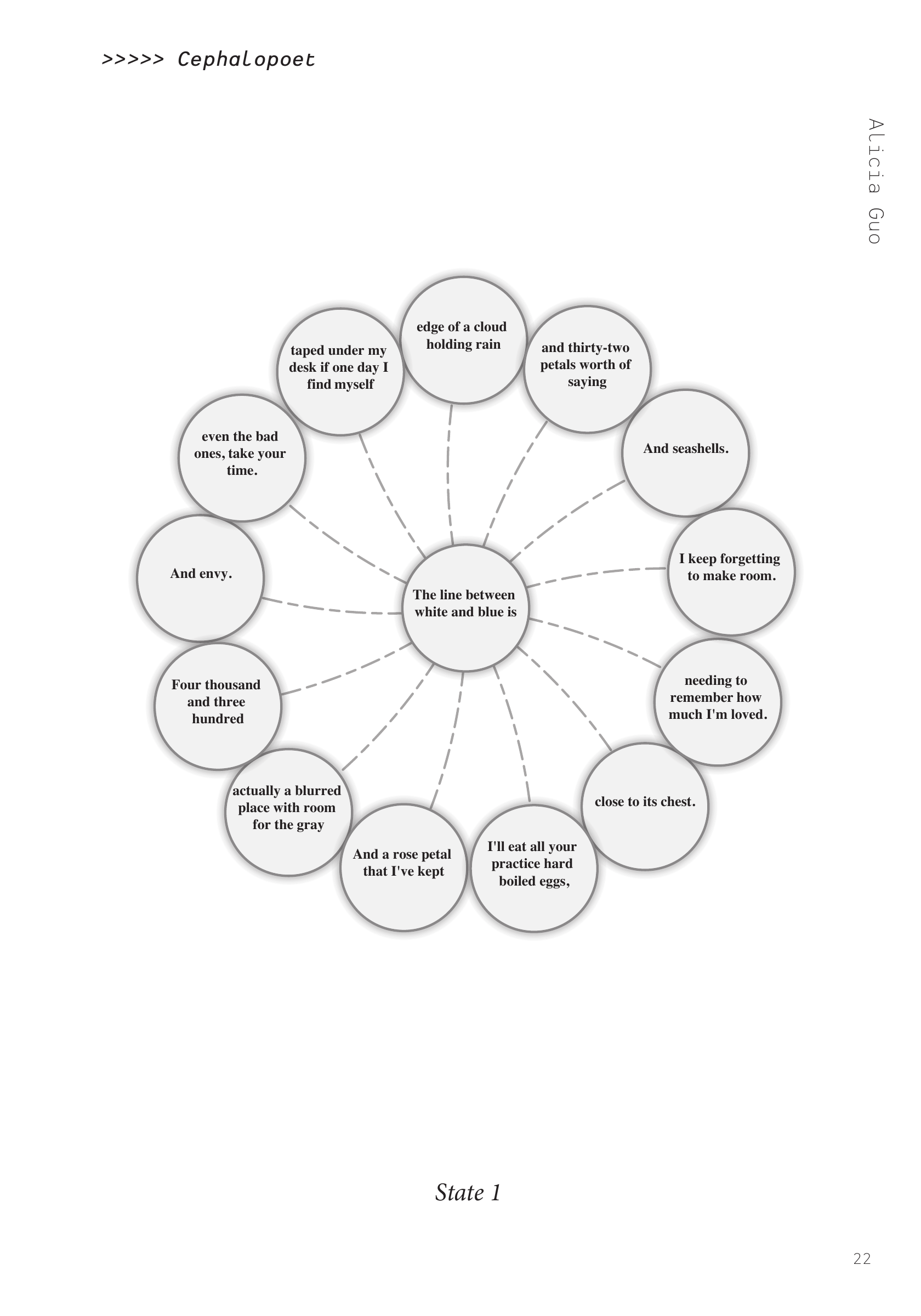
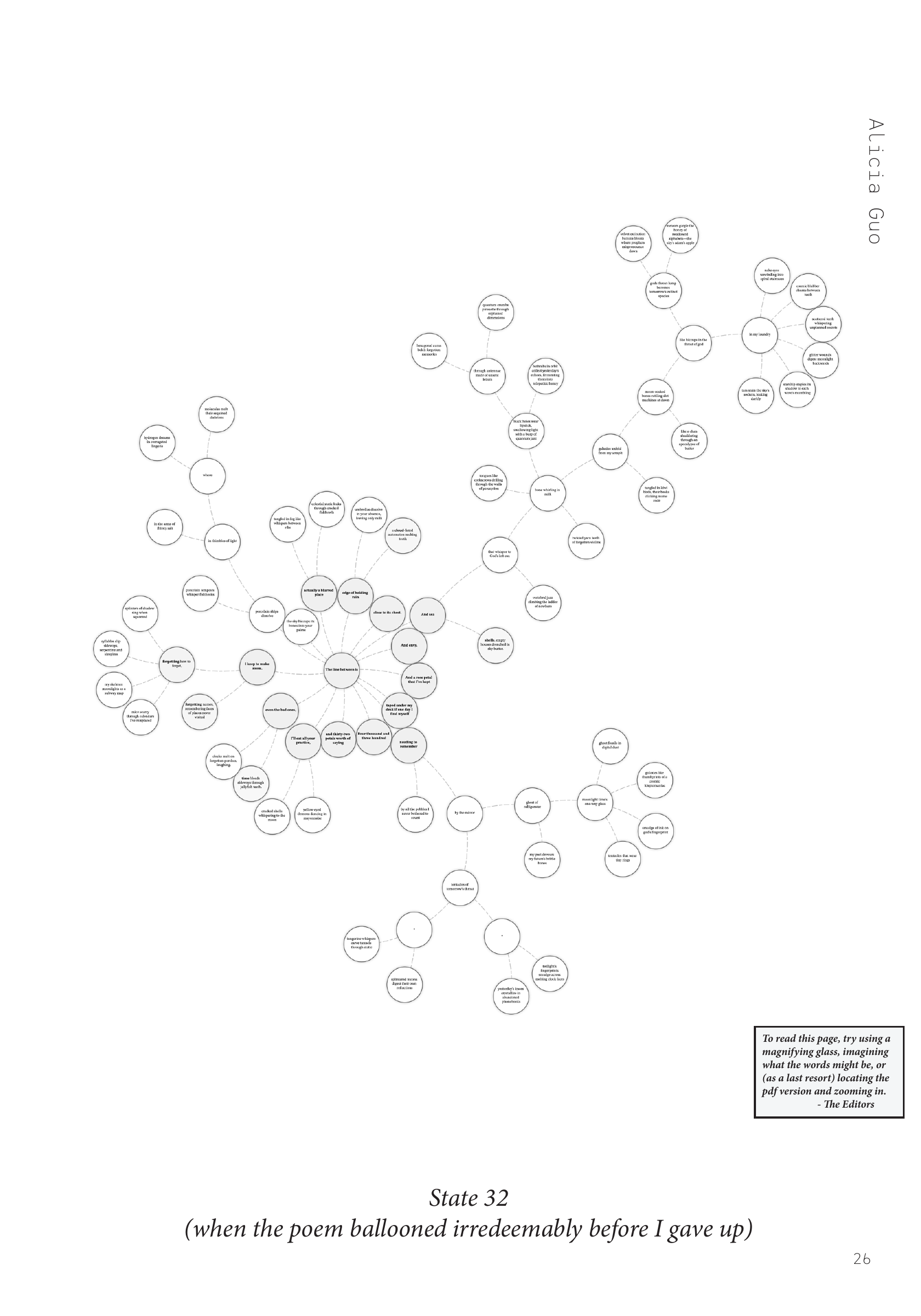
Figure 2. Alicia Guo, Cephalopoet, State 32, showing branches expanding through repeated editing.
A reader trying to shorten the poem encounters a conflict between the purpose of pruning and the expansion produced by each deletion. Repeated attempts can direct attention to the rule itself. Pursuing reduction would require another procedure; pursuing the artistic experiment would involve attending to the experience of continually generating what one seeks to remove. The reader's next decision therefore depends on which purpose becomes important. The encounter can change the object of judgment from the quality of individual phrases to the organization of editing.
The portrait and the poem locate revision at different points in practice. Comparing portraits can change the artist's criteria for selecting images. Interacting with Cephalopoet can change the reader's understanding of the procedure needed to pursue a purpose. In the poem, frustration also acquires an artistic role: the repeated expansion gives the expectation of editorial control a form the reader can experience. The question then becomes what the rule lets readers experience, and whether that experience is worth retaining as part of the work.
A reader can justify a changed purpose by pointing to the effects of an editing rule; a critic can direct attention to relationships within a sequence. A mathematical proof gives researchers another reason for revision by establishing a consequence of claims they already accept. In each case, a contribution opens an accepted judgment or purpose to reconsideration, and its implications often emerge only as the work continues.
3
Discovery and the Revision of Commitments
A person can accept a claim before recognizing every consequence it carries. This gap gives discovery its capacity to change a position: a new argument may reveal that two beliefs previously held together are incompatible. In Brandom's account, the discovery matters because it reveals what the claims researchers already accept require of them. Researchers acquire a reason to revise their position when they recognize the conflict and examine the grounds for resolving it. Generative systems can participate in this process by proposing a construction or argument that makes an overlooked consequence available.
Alman and Vassilevska Williams[7] report such a contribution in work on 3SUM, the problem of deciding whether a list contains three numbers that add up to zero. An algorithm is a defined sequence of steps for solving a problem. The researchers’ new algorithm applies to integers within a specified size range and improves a previously conjectured running-time bound. The authors credit Claude with discovering the central algorithm and describe their subsequent work on its explanation and extension. A conjecture is a claim awaiting proof; a theorem establishes a claim through a proof within specified assumptions. Researchers can organize substantial work around a conjecture and still acquire grounds to relinquish it through an unexpected construction. Their commitment to valid inference makes this change necessary once they accept the construction and its analysis.
The 3SUM example concerns the discovery of an algorithm. P versus NP places the distinction between finding and checking an answer in a wider computational setting. An exhibition organizer, for example, has to find an arrangement satisfying restrictions on space, lighting, and which works can appear together. Given a proposed arrangement, the organizer can inspect the placements and check the restrictions. Finding an arrangement requires coordinating them across the available choices. The distinction concerns two activities directed toward the same purpose: producing a satisfactory answer and assessing a candidate answer.
Computer scientists study these activities by measuring how computational work grows with input size, the amount of information used to state the problem. A polynomial-time method keeps this growth within a fixed power of the input size, such as its square or cube. P contains yes-or-no problems that an algorithm can solve within such a bound. NP contains problems whose positive answers have supporting evidence, called a certificate, of polynomial length that an algorithm can check in polynomial time. P versus NP asks whether every problem with such efficiently checkable evidence also has a polynomial-time solving method. Efficiency here specifies a growth rate; the exponent, constants, and input size determine practical running time [8].
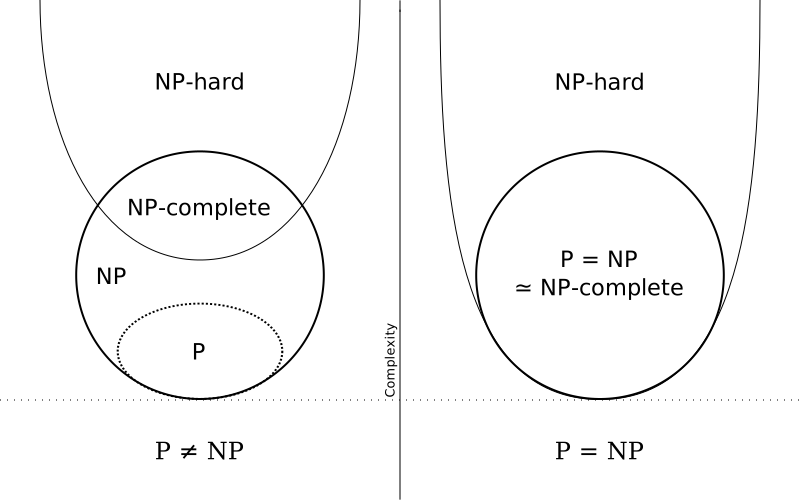
One way into this question is the problem known as 3-SAT. Each variable takes a value of true or false. A clause groups up to three terms, each requiring a variable to be true or false, and at least one term in every clause must hold. A proposed assignment can be checked clause by clause. Finding one that satisfies all clauses requires coordinating their overlapping requirements. The problem is NP-complete: every problem in NP can be translated into it through a polynomial-time conversion. A polynomial-time algorithm for general 3-SAT would therefore establish P = NP. The Clay Mathematics Institute continues to list P versus NP as unresolved [10].
The Exponential Time Hypothesis (ETH) proposes a more specific barrier for 3-SAT. It rules out an algorithm whose worst-case running time is subexponential in the number of variables. Exponential growth multiplies the work by a fixed factor as size increases; subexponential growth is eventually slower than every exponential bound with a fixed positive rate. It can nevertheless exceed every polynomial. A general subexponential algorithm would refute ETH, while a polynomial-time algorithm would additionally establish P = NP. On October 26, 2026, OpenAI announced a claimed refutation of ETH, and Impagliazzo, Paturi, and Williams organized an independent examination of its correctness and consequences [11][12].
If the proposed algorithm is verified and accepted, it would change how researchers assess computational difficulty. Earlier proofs of what follows if ETH holds would retain their logical form. Researchers would reconsider how those implications guide further inquiry and whether existing relationships among problems support new algorithms. Researchers would still rely on valid inference and retain those conditional proofs, but they would have reason to stop treating ETH as a reliable barrier. Plasticity would lie in their capacity to reconsider established results in light of that change and develop new directions of inquiry.
If P = NP, the consequences would extend beyond particular discoveries: for a class of problems, it would provide a route from deciding whether an answer exists to constructing one. Suppose a program can efficiently determine whether a partial exhibition arrangement has a valid completion. It can tentatively place one work, ask whether completion remains possible, and retain or revise that placement. Repeating the process constructs an arrangement. For polynomially bounded candidates with efficient checking procedures, P = NP would make the relevant decision questions polynomial-time solvable and support this step-by-step search. Both finding and checking would then belong to the polynomial-time class, with their particular running times determined by the algorithms involved [13].
The search for mathematical proofs is one important application of this route from decision to construction. A researcher can choose a formal system with efficiently checkable proof steps and set a maximum proof length. Under P = NP, a proof within that bound could be found in time polynomial in the statement size and the bound itself. The resources required would therefore remain sensitive to how long a proof must be. A practically effective implementation could make previously exceptional bounded discoveries routinely obtainable and redirect inquiry toward their relationships and implications [14]. A community would then have to reconsider how it recognizes creative achievement when valuable constructions become easier to obtain.
If valuable proofs became easier to find, communities might also reconsider how they recognize creative achievement. That possibility invites a distinction between the difficulty of obtaining a result and the significance of the result itself. Two researchers could produce equally informative proofs through very different expenditures of time. Those histories would matter to education, biography, and credit; the proofs would establish their claims through the arguments they contain. Artistic labor can likewise contribute to a work when duration or effort becomes part of what an audience encounters. As production becomes easier, makers and critics have reason to specify what that labor contributes and which qualities of the work deserve attention independently of its scarcity. Plasticity at this level concerns a community's capacity to revise the grounds on which it values achievement.
The distinction also changes how earlier difficulty is understood. Repeated attempts may encourage researchers to believe that a barrier is inherent to a problem. A new algorithm can disclose a relationship that lets them avoid the search their earlier methods required. P ≠ NP would establish a worst-case limitation on polynomial-time algorithms for some efficiently verifiable problems; individual instances could still admit effective solutions. The relevant intellectual revision therefore concerns a specified task and computational model. Researchers learn which part of their earlier difficulty arose from the methods available to them, and that knowledge changes what they have reason to attempt next.
Moving from computation to artistic production raises another question: what criteria organize a search and determine how its results are judged? A composer might specify instrumentation, duration, and recurring motifs. An algorithm that checks these properties defines a target, and a successful search produces music satisfying that target. Its relevance to a compelling symphony depends on how the selected properties express what listeners value. Aaronson places the computational consequence in the availability of an algorithmic recognizer of the relevant achievement. Choosing or developing that recognizer already requires judgments about the qualities a successful result should possess.
A generated passage can give the composer reasons to revise those judgments. Suppose the task calls for an uninterrupted melody, yet a generated pause gives the melody's return an unexpected force. The composer may reorganize the piece around the relationship between interruption and return. The new purpose creates specific requirements: extending the pause could intensify expectation, while adding a phrase could weaken the contrast. Listening and editing develop what the composer has accepted by pursuing that relationship. Commitment makes the change consequential for later choices; plasticity allows the encounter to reshape the criterion through which the composer makes them.
Boden[15] distinguishes exploring a conceptual space, the conventions and constraints that organize recognizable possibilities, from transforming the rules through which those possibilities become relevant. She considers computational models of both activities. An AI contribution can therefore help people search according to an existing criterion, but it can also give them reason to reconsider the criterion itself. The resulting transformation gains substance when participants work through its effects: which earlier requirement should be retained, which should change, and what the new purpose makes important to the next decision.
Returning from aesthetic judgment to knowledge, a related gap remains: accepting premises does not mean knowing all their consequences. Aaronson discusses logical omniscience, the idealized condition of knowing every consequence of anything one knows. Actual researchers accept assumptions whose implications remain partly undiscovered. A new construction can add knowledge by making an implication available for investigation. An AI system's dependence on existing material is compatible with this contribution: the premises provide its starting point, while the newly available consequence changes what researchers know and what their accepted positions require.
If computational methods make more results accessible, they can also change the questions a research community is able to pursue. A practical method for finding bounded, checkable answers would allow researchers to compare more constructions and investigate relationships that previously demanded prohibitive searches. Empirical inquiry gives those results another kind of test. Two explanations can fit the same observations and predict different outcomes for a further experiment; their disagreement then supplies a reason to collect additional evidence. AlphaFold's development and assessment, for example, linked predicted protein structures to experimentally determined structures [16]. Scientific commitment connects computational proposals to the observations through which researchers can revise their account of the world.
Not every practice benefits from making computation easier. Some protections depend on preserving computational difficulty. Cryptographic protections can rely on the cost of recovering a secret, so practically effective algorithms arising from P = NP would redistribute access and vulnerability . The value of easier discovery depends partly on the purposes a barrier serves. A commitment to extending knowledge may favor removing one barrier, while a commitment to confidentiality supplies reasons to preserve another form of protection. Participants have to reconsider the means by which they pursue these purposes as computational capacities change.
Across these examples, a contribution gains force through the judgments and actions that follow when people accept it. A researcher who accepts a proof must reconsider conflicting beliefs; a composer who pursues an unexpected musical relationship must judge subsequent changes in relation to it. The grounds for revision differ. A proof can resolve a question under accepted standards of inference. A musical passage can make a previously unvalued relationship worth pursuing, giving listeners an occasion to develop and dispute the criterion itself. Commitment carries both encounters into later choices, while plasticity enables participants to revise what they believe or value through those consequences.
4
How a Work Changes the Grounds of Judgment
Kant's distinction between determining and reflective judgment describes two ways of relating a particular encounter to a general account. In determining judgment, someone applies an available rule to a case. In reflective judgment, the person seeks an appropriate account through attention to the particular. Kant locates aesthetic criticism in the development and exercise of judgment, which viewers undertake through their own encounters with a work [17]. Reflective judgment helps explain how an unfamiliar work can change which features a viewer finds significant.
A critic approaching the blurred portrait through technical sharpness and adequate likeness might reconsider those criteria when viewing the sequence. The arrangement could make the difficulty of recognizing the face important to its effect. Assessing that proposal requires attention to what the images do together: when a face becomes recognizable, which details persist, and how one image changes the memory of another. The critic develops a judgment by following the relationship through its particular presentation.
The relevance of an interpretation can be tested by comparing possible arrangements. It directs attention to features that matter to the work and explains how particular choices strengthen, weaken, or redirect their relationship. Another viewer may recognize the proposed relation and judge its treatment unconvincing. Their disagreement then has a shared object: the timing of recognition, the effect of an interval, or the dependence of one image on another. Criticism develops the criterion by showing what it brings to attention and what it allows viewers to dispute.
Both mathematical and artistic encounters can prompt revision, but the grounds for revision differ. Researchers accepting a proof revise a claim through a standard of inference they retain. Viewers encountering an unfamiliar arrangement can revise the importance they assign to its features, developing reasons through perception and discussion. The comparison therefore concerns what gives participants reason to revise a particular judgment. A practice can employ both: artists also assess factual claims, and mathematical researchers can reconsider concepts and research purposes. Identifying the operation explains how a particular contribution acquires force.
Toister and Zylinska's (2025) account of image thinking helps explain how generated material enters this development. An image can make an association perceptible that the artist's prompt left unspecified. Discussion of that image can introduce a further proposal, which then informs another act of making. Each movement gives the artist material through which to examine the association. The proposed interpretation gains practical force as it changes the relationships the artist develops and exposes those relationships to an audience.
Lisa Oppenheim's Monsieur Steichen, presented at the Rencontres d'Arles in 2026, gives this process a specific historical object. The project concerns an extinct iris cultivated by the botanist Fernand Denis in 1910 and named in Steichen's honor. Oppenheim used AI to generate hypothetical hybrids from images of its two parent varieties. She then made dye-transfer prints, a photographic process that builds color through successive transfers of cyan, magenta, and yellow dyes. Altering the color combinations multiplied the flower's possible appearances [18][19].
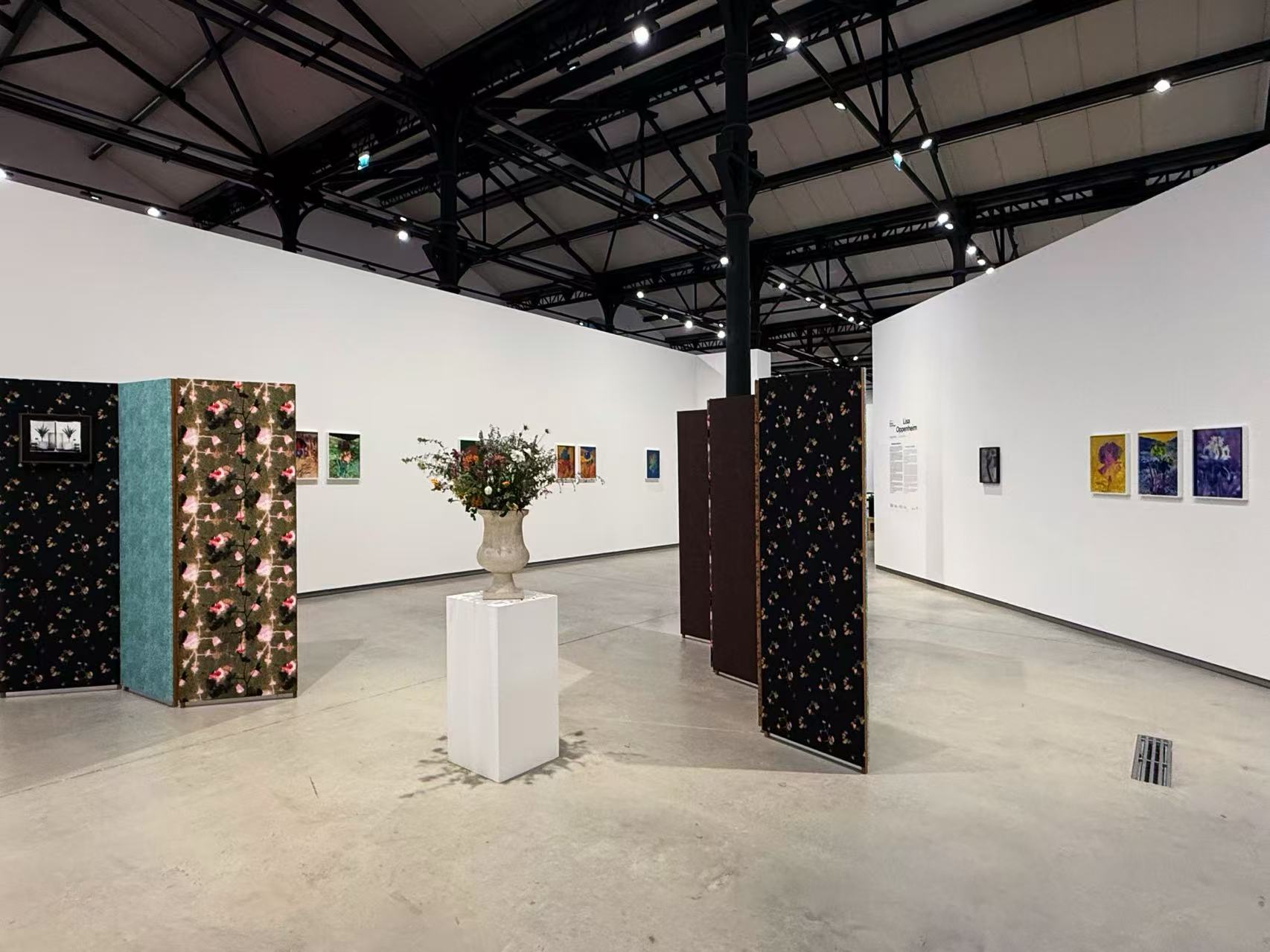
Oppenheim's procedure gives the lost cultivar a series of constructed possibilities. Images of the parent varieties supply material for generating hybrids, and the color transfers make further decisions about their appearance visible. Viewers can compare the features that remain recognizable across the prints and the changes that draw attention to their construction. A botanical-looking image acquires a particular authority through its apparent completeness; the series makes that authority available for examination through differences among its versions.
The series can be read as an inquiry into how images make an absence visible when historical evidence cannot establish what the lost flower looked like. On this reading, viewers assess whether differences among the prints sustain attention to that absence. Color, variation, and resemblance matter through the relationships they establish across the series. A reconstruction offered as historical evidence would invite an assessment of correspondence to the lost flower. The hypothetical hybrids propose another artistic purpose: making possible appearances available while keeping the question of the cultivar's actual appearance open.
That purpose gives particular choices consequences. Color variation can develop the range of possible appearances, while the accompanying account identifies their hypothetical status. Viewers can then examine both the historical account of the iris and the way the series gives its absence a perceptible form. They may accept the history and disagree about the artistic effect. The artist's commitment to the proposed inquiry gives them grounds for asking how each variation contributes to it.
The encounter shows how a changed artistic criterion operates alongside continuing evidential commitments. A viewer can come to value a convincing image for the uncertainty its relation to other images sustains. Claims about the cultivar's history continue to require historical support. The viewer thus revises the purpose assigned to the images while assessing factual statements through their evidence. This selective revision explains how an artistic discovery can change a criterion and retain the relationships that make the change intelligible.
In MT's The Honest Photographer, a generated street photograph appears alongside alternative stories, commentary, and moving-image sequences extending before and after the apparent instant. Production conversations and materials accompany the images [20]. The still gives the depicted gesture the appearance of a singular moment; its alternative continuations place that gesture within several constructed events.
A viewer may initially approach the still by asking what happened immediately before the gesture. The generated continuations turn that question toward the construction of an apparent event. Each sequence proposes a different temporal setting, making it possible to examine how a gesture acquires direction or apparent inevitability. Attention shifts to the relationship between the still and its continuations: together, they make the image appear to belong to an unfolding situation. The alternatives give the viewer material for comparing how that impression is produced.
The work brings factual and compositional judgments into the same encounter. Evidence establishes whether a scene occurred; duration and sequence shape how viewers experience the depicted time. Presenting the scene as generated fiction specifies its relation to historical evidence and gives viewers grounds to examine the constructed event on those terms. The artist can develop another account of what the image achieves while continuing to identify its origin accurately. That continuing commitment supports the change in artistic purpose.
Once the constructed relationship becomes important, the continuations' length, placement, and relation to the still guide compositional decisions. One possible arrangement could show two continuations together, inviting direct comparison. Another could show them successively, making memory part of the encounter. Each choice affects how viewers recognize a difference and how that difference changes the apparent instant. Examining these alternatives gives the proposed interpretation concrete requirements that can guide further making.
Generated commentary adds a further relationship for viewers to assess. The workflow produces both images and accounts of their significance. A viewer can follow an account across the still, its continuations, and the production records, examining which relationships become perceptible. Agreement between language and arrangement can clarify an effect. A discrepancy can disclose something the commentary overlooks or reveal a claim that the material sustains weakly. The work makes the generated interpretation a claim that viewers can compare with their own experience of the same material.
The interpretation can consequently affect the artist’s decisions about duration, repetition, and comparison. A critic can question whether the continuations produce distinct effects, identify a relationship that appears mainly in the caption, or describe an effect the commentary misses. The artist can respond by changing the arrangement or revising the account of its purpose. Such exchanges develop the commitment through specific features that participants can return to, compare, and alter.
A maker who begins by selecting the most convincing simulated instant may come to value a sequence that unsettles that conviction. The changed criterion affects which images belong in the work. A visually resolved image may obstruct the uncertainty being pursued, while a less complete image may give the continuations greater force. Plasticity becomes identifiable in this acquired capacity to distinguish among choices. The encounter has changed what the maker can recognize as relevant to the next decision.
Oppenheim constructs possible appearances for a lost object; MT constructs alternative temporal surroundings for an invented instant. Both projects make the relationships between images central to how viewers understand the work. Their historical claims require different accounts: uncertainty about a lost cultivar and the fictionality of a generated event establish different starting points for viewers. The comparison shows how a work's proposed purpose and its account of origin jointly guide judgment. Generated language can help articulate those relationships and can also change what the artist claims for them.
5
When Generated Language Changes a Position
Writers develop relationships among claims as they turn a plan into prose. A generated sentence can introduce an implication that changes the position an author presents. For artists, this can occur in production instructions, statements, applications, or criticism: the language changes what the work is understood to propose and what support that proposal requires. Researchers at Write Futures Lab examine how assistance at different stages of writing affects this developing relationship between a writer and a text.
Gero et al.[21] studied 253 participants writing short argumentative essays with AI support during planning, drafting, or revision, alongside a no-assistance condition. Participants receiving generated drafts reported the lowest psychological ownership and submitted the highest-scoring essays under an automated assessment calibrated against human grading. Participants also attributed substantive ideas to AI when drafts were based on outlines they had supplied. The study measures perceived ownership and assessed quality, showing that these dimensions can develop differently as the stage of assistance changes.
Feeling ownership of a text and accepting the consequences of its claims, however, are not the same thing. A writer can follow the consequences of a model-supplied argument while feeling little ownership over its wording. Another may feel strong ownership and discover an implication only when a reader identifies it. Commitment becomes evident in how each writer responds: examining an unsupported premise, resolving an incompatible conclusion, or revising the position. These responses give the reader grounds to assess what the writer accepts and how an objection can change the argument.
Consider an artist's statement that begins, “This work records encounters in public space.” A generated revision changes it to, “This work constructs possible encounters in public space.” The verb records directs readers toward events that occurred; constructs possible encounters directs them toward a fiction and its plausibility. Accepting the revision changes the kinds of support the statement needs. The writer must reconsider which examples, captions, and claims about the images follow from the new formulation.
The model's wording can therefore help the writer discover a consequential distinction. The writer develops it by tracing its effects through the text: revising a caption, changing the role of a production record, or explaining how the constructed scene organizes an imagined event. These adjustments give the revised sentence a coherent place in the argument. They also allow readers to assess the project through the purpose the statement now proposes. Commitment becomes practical when the writer accepts those implications and revises other parts of the text accordingly.
The stage at which AI enters matters because drafting and revision leave different decisions open to the writer. During drafting, the author develops connections an outline leaves open. A generated draft can supply those connections and give a position its first extended form. During revision, the author works with an argument whose tensions and dependencies may already be familiar. Gero et al. show that perceived ownership and assessed quality vary with the timing of assistance. A writer's commitment develops through another activity: recognizing which claims the evolving text makes and carrying their implications across its parts.
Generated interpretations can also enter a recursive process of making. An artist uses a model's account of an image as a prompt for the next image, and the new result develops the proposed relationship. The artist can examine that relationship by comparing alternatives, attending to resistant details, and inviting other interpretations. When every subsequent image is selected for agreement with the account, the workflow reinforces the initial description. Keeping consequential differences available gives the artist grounds to assess the direction being developed.
Critical distance depends not only on whether an objection is raised, but also on whether it can affect later choices. The artist and model can produce alternatives that reveal a weakness in the preferred interpretation. Another viewer can identify an overlooked feature and redirect the work. Participants establish critical distance when such contributions affect their choices. This makes criticism an activity within the developing collaboration and raises a question about its conditions: which features of the system encourage particular judgments, and which decisions can participants revise?
6
How Systems Shape the Capacity to Judge
The discussion so far has considered how artists exercise judgment within a workflow. Another question is how the systems providing their tools shape that judgment. Steyerl's Mean Images (2023)[22] places this question within the conditions of production. She examines statistical imagery through racial classification, appropriated cultural material, labor, and proprietary infrastructure. Her observation that systems train their users connects these arrangements to judgment. Repeated use can teach people habits of prompting, selecting, and accepting that fit a service's design. Those habits influence what users come to recognize as an attractive result and which ways of working become familiar.
Steyerl develops this argument through early public image-generation systems and a political emphasis on extraction, classification, and dependence. Her use of mean links statistical production to aesthetic and economic judgments. Those relationships require different kinds of evidence. An account of how a platform acquires data establishes conditions of production; the effects of a particular arrangement also depend on what artists and viewers do with its results. Toister and Zylinska locate image thinking in these recursive encounters and challenge dismissals of synthetic imagery as average or “mean.” Their argument makes the cognitive effects of use a further object of inquiry, alongside the production relations Steyerl examines.
Malabou's distinction between flexibility and plasticity helps examine the direction of that learning. An artist may become skilled at obtaining a platform's readily available visual solutions and gradually adopt them as preferences. Recognizing this pattern can make the conditions of selection an object of inquiry. The artist might compare results across tools, alter prompts, or revise the criteria used to retain images. Each action tests a possible response to the shaping conditions. Evidence about these decisions shows where the artist can change the practice and where the platform continues to determine the available choices.
In Mechanical Kurds (2025), presented at MACRO in 2026, Steyerl combines footage from the Domiz refugee camp in Iraqi Kurdistan with generated imagery. The film includes the voices of three Kurdish-Syrian refugees engaged in image annotation. These workers identify objects using bounding boxes, rectangular outlines that mark objects for computer-vision systems, which process images computationally. MACRO's presentation repeats the boxes in the exhibition design [23]. A technical marking operation thereby becomes part of the space in which viewers encounter the work.
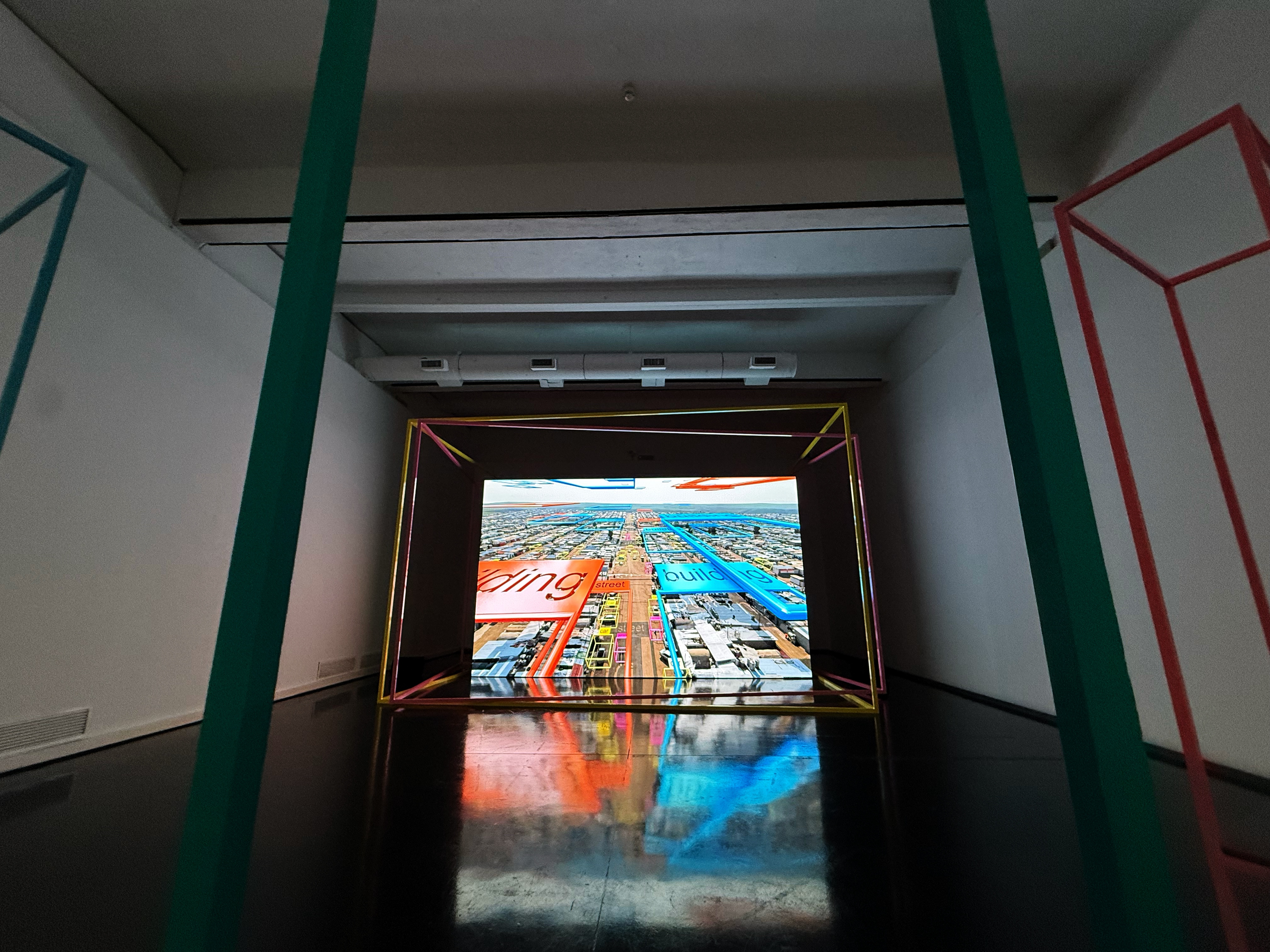
In a training image, the box identifies an object the system should learn to recognize. In the installation, the same shape directs attention toward the people who draw the boundary and the contexts in which its classification may be used. The workers' voices bring the people behind the operation and their social circumstances into view. Viewers encounter the labor through which an apparently elementary visual distinction becomes material for an automated system. The arrangement can change which part of that operation they consider important.
The work also distinguishes understanding a label from having the power to determine how it is used. A viewer can reconsider what the box signifies; a worker contributes an annotation that helps a system identify an object. Those activities have different consequences and take place under different conditions. Documentary claims about the workers' circumstances call for evidence, while speculative sequences propose relationships through which viewers consider its significance. Steyerl's composition brings the modes together, making the support for particular claims and the effects of their arrangement jointly available for judgment.
Steyerl makes the uses of classification consequential to the judgment of an image. Once viewers assess a system through its effects on the people it classifies, technical accuracy becomes one requirement within a larger purpose. Concern for those people introduces questions about who determines a label's use and who can challenge it. The installation brings these demands into view through the relationship between workers' voices and the visual operations they perform. Acting on the demands requires authority over the procedures and institutions that give a classification its effects. A changed judgment can thus establish a reason to seek changes in the rules of production.
7
Who Can Change the Terms?
What can artists change about these conditions? One possibility is to make the rules governing participation part of the work itself. Strange Rules, presented at Palazzo Diedo in 2026, develops this possibility through the curatorial proposal of Protocol Art. Mat Dryhurst, Holly Herndon, and Hans Ulrich Obrist, with Adriana Rispoli, organize the exhibition around protocols: rules governing what participants or systems can contribute, exchange, and change. Treating these rules as artistic material brings their effects into the work's form and proposed purpose [24].
Within Strange Rules, Herndon and Dryhurst's Attention Guild (2026) organizes participation around artist-defined missions. Software agents are programs that perform tasks across successive interactions. In this work, the agents develop applications using information that visitors contribute to a collective memory. A musical language makes the agents' exchanges audible, and the resulting software is published through a public repository, an online collection where people can inspect and obtain the code [25]. The installation connects the exhibition's proposal about protocols to specific acts of listening, contributing information, and producing software.
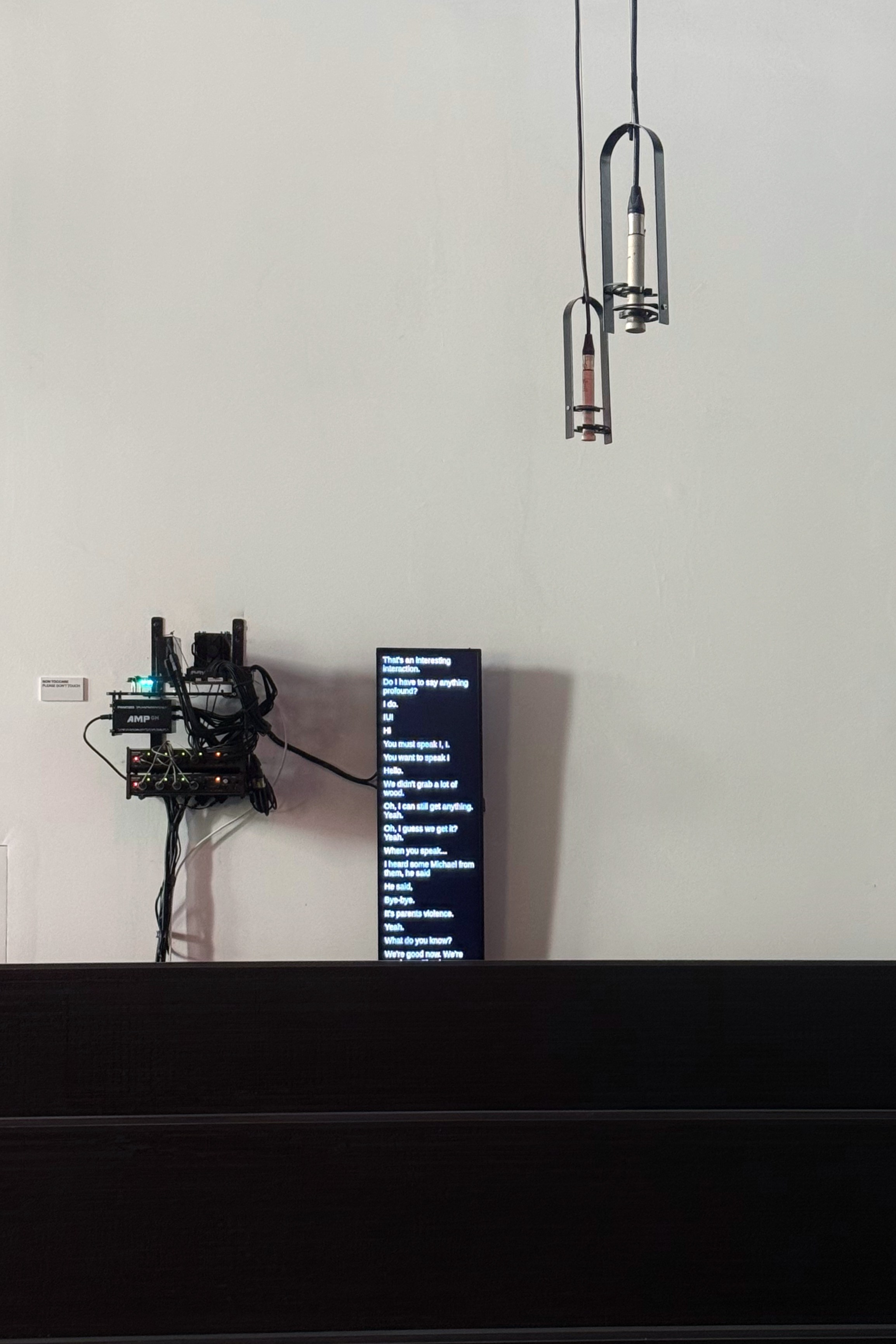
Each activity has a particular consequence. The musical exchanges give computation a sensory form. Visitor contributions can influence what the agents produce. The artist-defined mission organizes the purposes toward which they work. Following these connections allows a viewer to ask which decisions a contribution affects and how that effect becomes recognizable. Participation acquires a specific meaning through the path from an input to a change in the work.
Dryhurst identifies working software as a requirement the artists place on their protocol-art thesis [26]. That requirement offers a way to assess the generated applications: do their functions contribute to the purpose the artists propose? The audible exchanges invite judgments about the sensory encounter, while the claim of collaboration directs attention toward whose contributions influence the result. The work's ambitions establish several grounds for assessment, each connected to a particular operation or relationship.
In MT's AI Art Is (Not) Art, two agents generate opposing arguments through the artist's cloned voice. Recent dialogue informs later exchanges, and the procedure continues the dispute without a final adjudicator [27]. The artist sustains opposition as the condition under which each new statement appears. Continued disagreement becomes material for the installation's audiovisual form, giving the fixed rule a compositional purpose.
A statement can persuade a viewer while the procedure continues to produce another reply. The shared voice gives contradictory positions the same audible identity, and repetition makes the persistence of disagreement part of the experience. Viewers can follow an argument, attend to its rhythm, or move between those activities. Timing and presentation determine how the force of a particular claim relates to the continuing exchange. The work invites judgment of that relationship through listening over time.
The decision to sustain opposition also places demands on the form of the work. Changes in timing, voice, and repetition can strengthen or weaken the experience the fixed rule supports. Viewers can assess those decisions by examining how the arrangement makes persuasion and continuation diverge. The governing rule also identifies the limits of an utterance's effect within the system: a contribution informs subsequent dialogue while opposition remains the organizing condition. That persistence can become an artistic subject in its own right.
The comparison with Attention Guild shows how a proposed purpose gives particular contributions their significance. Herndon and Dryhurst direct activity toward missions and working software; MT organizes an experience of continuing disagreement. Critics can trace the connection between each purpose and the procedure that sustains it. They can also question the purpose itself by examining what its pursuit brings into view or excludes. Artistic judgment therefore concerns both the effects of a procedure and the reasons for maintaining it.
The Little Free Language Models initiative proposes a language model created by writers for their creative community [28]. Contributors would help determine the purposes of a resource that uses their work. Contributors would not only provide material; they would also help decide the conditions of generation, allowing their consent and continued participation to influence how the model develops.
Guo et al.[29] report workshops in which writers proposed community language models organized around continuing consent, community boundaries, recognition, and scale. These proposals specify decisions that contributors might make together. To implement them, a community would need procedures connecting a reservation or withdrawal request to a change in how material is used. Authority, technical access, and resources determine whether those decisions can take effect. Continuing consent becomes a practical form of governance only when those decisions can actually take effect.
The distribution of that capacity connects the governance proposal to Steyerl's analysis of infrastructure. An artist can directly revise a caption. Altering a provider's use of training material may require decisions held elsewhere. A changed judgment consequently has different routes to action depending on the conditions of production. Identifying those routes explains where a participant can transform a practice, where collaboration is required, and where another institution controls the relevant decision.
Attention Guild locates visitor contributions within an artist-defined mission. The community-model proposals make contributors' authority over data use an object of design. The comparison directs assessment toward specific decisions: who establishes a purpose, who supplies information, and who can revise the rules connecting the two? A commitment to contributor control would require procedures granting contributors influence over those rules. Assessing the proposal therefore requires asking what powers it would actually give contributors and what changes those powers would enable.
Commitment and the means to act on it can be distributed across different participants. A writer who withdraws permission may depend on administrators to change access; an artist who questions a selection rule may depend on a provider to alter its implementation. Following those dependencies identifies where an obligation calls for collective action or institutional change. The account of commitment thus leads to an examination of authority: which participants can make a recognized requirement operative, and what arrangements support that capacity?
8
Conclusion
Generative AI can participate in forming the purposes through which people organize their work. A generated image may reveal a relationship worth developing, a sentence may change the claims of an argument, and a proof may require the abandonment of a conjecture. These contributions become consequential through changes in later decisions: participants acquire reasons to distinguish among alternatives and to reconsider what they pursue.
Plasticity concerns the capacity to acquire another way of perceiving and judging through an encounter. Commitment explains why that encounter can require a change. A person may adopt a position before recognizing everything it entails; later work can disclose a conflict or a relationship that reorganizes its implications. Continuing to pursue a question seriously may therefore require abandoning a favored answer, revising a criterion, or changing a procedure. The commitments that remain active give others grounds to understand the revision, while a new purpose establishes requirements for subsequent choices.
The grounds for these changes differ across practices. A mathematical proof can overturn an expectation through accepted standards of inference. An artwork can make a neglected relationship perceptible and give viewers grounds to reconsider its importance. A writer can discover a position by following the implications of a formulation. Efficient discovery could also change how communities value achievement by making important results easier to obtain. Each development asks participants to examine which part of a practice has changed: its available results, the criteria by which they are valued, or the purposes their production serves.
Artistic practice makes these changes perceptible through decisions about form and materials. A sequence can sustain uncertainty while its maker continues to identify the images' origins accurately. An editing rule can reveal a conflict between an action and its intended effect. An installation can give an objection a voice while holding fixed the conditions of its continuation. Viewers assess these relationships through the forms they encounter, and makers acquire grounds to preserve, revise, or relinquish particular choices.
Acting on a revised judgment also depends on authority. Participants may recognize a requirement whose implementation rests with another person or institution. A commitment to contributor control, for example, calls for procedures through which contributors can change the use of their work. Plasticity therefore concerns both the capacities participants develop and the arrangements they can alter. A practice transforms when an encounter changes what its participants have reason to do and they carry that judgment into the choices, forms, and relationships through which the work continues.
References
- [1] Toister, Y., & Zylinska, J. (2025). Image thinking after artificial intelligence. Journal of Visual Culture, 24(3), 431–451. https://doi.org/10.1177/14704129251405715
- [2] Malabou, C. (2008). What should we do with our brain? (S. Rand, Trans.). Fordham University Press.
- [3] Brandom, R. (2022). Commitments and concepts: Riyadh–MANA lectures [Lecture manuscript]. University of Pittsburgh. https://sites.pitt.edu/~rbrandom/Texts/Commitments%20and%20Concepts%20Lecture%20Texts%2022-2-26%20c.pdf
- [4] Guo, A. (2026a). Cephalopoet [Interactive computational poem]. https://aliciaguo.com/cephalopoet/
- [5] Guo, A. (2026b, May 29). Process note 8. Upcycled Words. https://upcycledwords.substack.com/p/process-note
- [6] GUO A. Cephalopoet[Z/OL]. Ensemble Park, issue 2, 2026: 22, 26. https://www.ensemblepark.com/issues/ensemble_park_2.pdf
- [7] Alman, J., & Vassilevska Williams, V. (2026). Truly subquadratic 3SUM and truly subcubic APSP via triangles in sparse lopsided graphs [Preprint]. arXiv. https://doi.org/10.48550/arXiv.2610.06783
- [8] Cook, S. (2006). The P versus NP problem. In J. Carlson, A. Jaffe, & A. Wiles (Eds.), The millennium prize problems. American Mathematical Society and Clay Mathematics Institute. https://www.claymath.org/wp-content/uploads/2022/06/pvsnp.pdf
- [9] ESFAHBOD B. P, NP, NP-complete and NP-hard complexity classes[Z/OL]. Wikimedia Commons, 2007. https://commons.wikimedia.org/wiki/File:P_np_np-complete_np-hard.svg (CC BY-SA 3.0).
- [10] Clay Mathematics Institute. (n.d.). P vs NP. https://www.claymath.org/millennium/p-vs-np/
- [11] OpenAI. (2026, October 26). Working with academic communities to build scientific understanding. https://openai.com/index/building-scientific-understanding-with-academic-communities/
- [12] Impagliazzo, R., Paturi, R., & Williams, R. (2026, October 26). ETH refutation: Examination and discussion. ETH: Community Examination and Discussion. https://ethdiscussion.blog/2026/10/26/eth-refutation-examination-and-discussion/
- [13] Aaronson, S. (2017). P versus NP [Survey manuscript]. University of Texas at Austin. https://www.scottaaronson.com/papers/pnp.pdf
- [14] Aaronson, S. (2013). Why philosophers should care about computational complexity. In B. J. Copeland, C. J. Posy, & O. Shagrir (Eds.), Computability: Turing, Gödel, Church, and beyond. MIT Press. https://www.scottaaronson.com/papers/philos.pdf
- [15] Boden, M. A. (1997). Creativity and artificial intelligence. In M. E. Pollack (Ed.), Proceedings of the Fifteenth International Joint Conference on Artificial Intelligence (pp. 1563–1565). IJCAI. https://ijcai.org/proceedings/1997/229
- [16] Jumper, J., Evans, R., Pritzel, A., Green, T., Figurnov, M., Ronneberger, O., Tunyasuvunakool, K., Bates, R., Žídek, A., Potapenko, A., Bridgland, A., Meyer, C., Kohl, S. A. A., Ballard, A. J., Cowie, A., Romera-Paredes, B., Nikolov, S., Jain, R., Adler, J., … Hassabis, D. (2021). Highly accurate protein structure prediction with AlphaFold. Nature, 596, 583–589. https://doi.org/10.1038/s41586-021-03819-2
- [17] Kant, I. (1914). Critique of judgement (J. H. Bernard, Trans.; 2nd ed.). Macmillan. (Original work published 1790). https://www.gutenberg.org/ebooks/48433
- [18] Steinbrügge, B. (2026). Lisa Oppenheim: Monsieur Steichen [Exhibition text]. Les Rencontres d’Arles. https://www.rencontres-arles.com/fr/expositions/2026/lisa-oppenheim
- [19] Mudam Luxembourg. (2025). Lisa Oppenheim: Monsieur Steichen [Exhibition guide]. https://dbf642yz813mr.cloudfront.net/documents/2025_02_03_LisaOppenheim_miniguide_EN.pdf
- [20] MT. (2026). 摄影语义化:算法可见性、查询式观看与生成影像的感知边界 [Semanticization of photography: Algorithmic visibility, query-based seeing, and the perceptual boundaries of generated images]. Chinese Photography [中国摄影], (6).
- [21] Gero, K. I., Long, T., Schnitzler, C., & Dhillon, P. S. (2026). From planning to revision: How AI writing support at different stages alters ownership. Proceedings of the 2026 ACM Designing Interactive Systems Conference. https://doi.org/10.1145/3800645.3813003
- [22] Steyerl, H. (2023). Mean images. New Left Review, 140/141, 82–97.
- [23] MACRO. (2026). Hito Steyerl. Mechanical Kurds [Exhibition text]. https://www.museomacro.it/mostra/hito-steyerl-mechanical-kurds-000
- [24] Berggruen Arts & Culture. (2026b). Strange Rules [Exhibition text]. https://berggruenarts.org/en/exhibitions/current-exhibitions-palazzo-diedo/current-exhibitions-palazzo-diedo-strange-rules
- [25] Berggruen Arts & Culture. (2026a). Mat Dryhurst & Holly Herndon: Attention Guild [Exhibition text]. https://berggruenarts.org/en/exhibitions/artists/mat-dryhurst-holly-herndon-2
- [26] Bellosi, G. (2026, May 26). “Strange Rules”: Mat Dryhurst and Holly Herndon at Palazzo Diedo Venice [Interview with Mat Dryhurst]. COEVAL. https://www.coeval-magazine.com/coeval/strange-rules-mat-dryhurst-and-holly-herndon-at-palazzo-diedo-venice
- [27] MT. (in press). 从分布式认知与系统支架视角看生成影像艺术中的作者性 [Authorship in generative image art: A perspective from distributed cognition and agent harnesses]. Chinese Photography [中国摄影].
- [28] Guo, A. (n.d.). Selected works and research [Artist website]. https://aliciaguo.com/
- [29] Guo, A., Schnitzler, C., & Gero, K. I. (2026). Seed bank, co-op, stoop swap: Metaphors for governing language model data for creative writing [Preprint]. arXiv. https://doi.org/10.48550/arXiv.2605.12888
