Project 01
AI Art Is (Not) Art
- Year
- 2025
- Medium
- Generative multi-agent installation
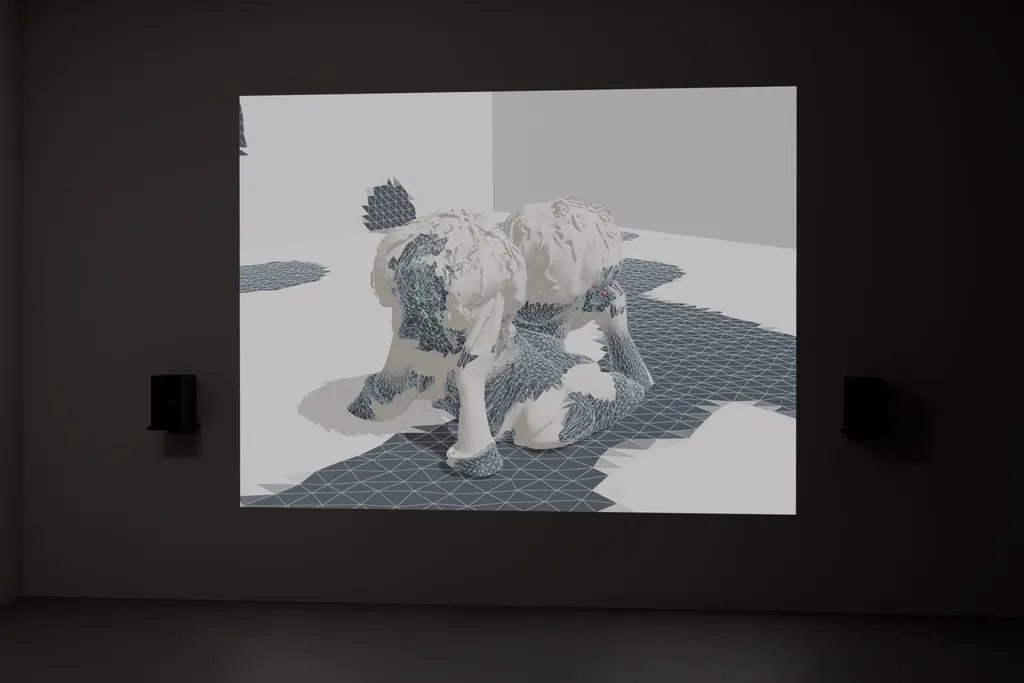
In AI Art Is (Not) Art, I bring my own use of AI into a continuing dispute about artistic value and the conditions of making. I am interested in what happens when the technologies through which I create a work also produce judgments about it. The installation gives those judgments my face and voice, placing my practice within the argument.
I give two AI agents opposing positions on whether work made with AI can be art. They generate their dialogue live and speak in my cloned voice. Their conversation moves between questions of artistic status and imagined situations involving authorship, consent, ownership, and compensation. Choosing an image from generated alternatives raises questions about what that choice contributes; reproducing a voice introduces questions about who can authorize its use. The exchange develops through the decisions and consequences particular to each situation. The technology under dispute produces both arguments. Neither agent fully represents my position.
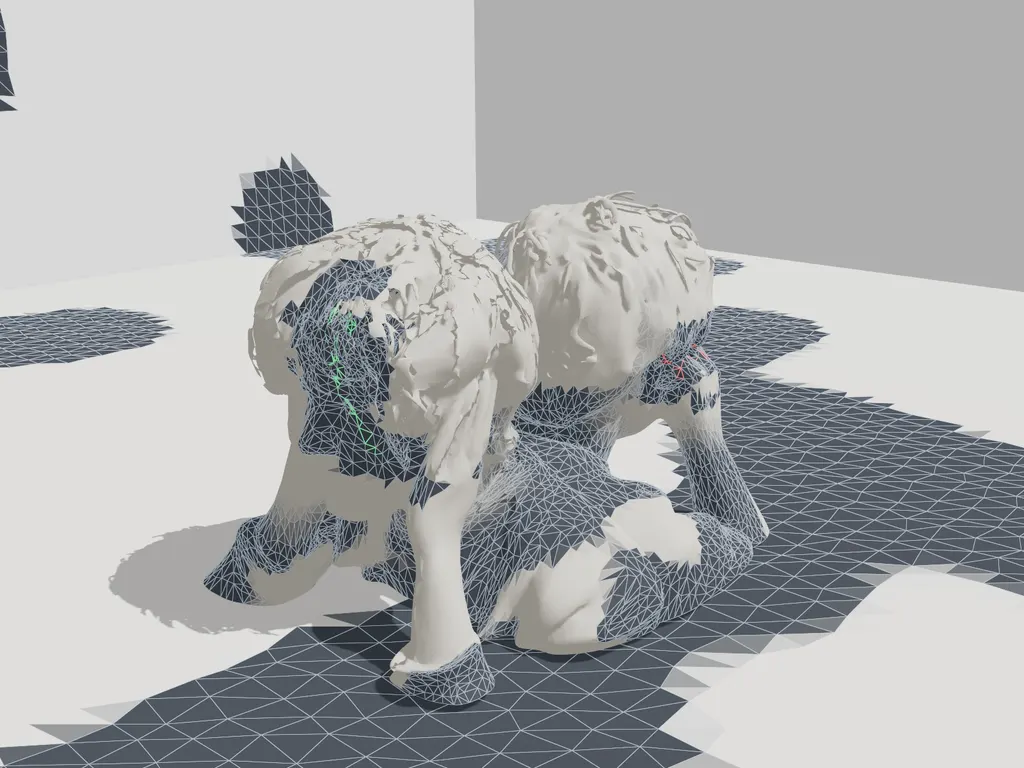
I posed for two photographs, covering my ears in one and my eyes in the other. I used AI to transform these photographs into 3D models, then fused the models into a single figure, seen in rotation within a virtual room projected into the gallery. The gestures recall the Three Wise Monkeys, with the figure covering its mouth absent. Speech continues between these obstructed gestures. Across the figures and the surrounding room, patches of pale surface recede to expose a dark triangular mesh, revealing their geometric construction. The surfaces repeatedly recede and return. I use this recurring visual decay to give form to the instability of the clash and the numbness that can develop through prolonged exposure to its arguments.
I compose the sound through both editing and programming, combining AI-generated recordings that I select, edit, and arrange with musical phrases composed and synthesized algorithmically during playback. A recurring electronic motif runs beneath the dialogue, while instrumental passages come forward between spoken turns. Algorithms coordinate the entrances and durations of music and speech: a passage can continue while a reply is being generated, and a completed reply can wait for a musical phrase to end. I use the pulse and shifting textures to make listening engaging while the arguments continue. The music is itself made through the generative, editorial, and compositional decisions that the voices put into question.
Their judgments also bear on my decisions about generating, retaining, altering, and presenting my likeness and voice. Those decisions shape what the audience sees and hears, making the installation a particular instance of the practice under discussion. My own work remains subject to the judgments I have set in motion.
Questions and answers
About this work
- Why are there two busts instead of three?
- The Three Wise Monkeys usually cover ears, eyes, and mouth. Here, the figures covering their ears and eyes are fused into one double image, while the figure covering its mouth is absent. Two cloned voices occupy that absence with continuous speech.
- How is AI used here?
- AI systems generate the opposing arguments, reproduce MT's voice, and reconstruct his likeness. The technology under dispute constructs both sides of the dispute.
- What is the work really asking?
- The machine speaks through MT's face and voice while performing two intentionally extreme positions. Their confrontation places opposing judgments inside the AI practice they judge.